Chris and Bree
Philpott's Blog
How much did we plan the next books in the
series while writing the first one?
(Posted 4/21/2014)
When we were writing The Death Watch, we had
the luxury of going back and changing earlier chapters to match ideas
we had when we were writing the later chapters. You can’t do that
with the entire series once the first book is out there (unless you’re
George Lucas, and even then it just looks weird).
Planning out the entire world and the arc of the series in the first book
was essential for us if we wanted the books to be rich and cohesive. We’re
really aspiring to create a tapestry full of the kind of details in Harry
Potter that we wrote about in our previous post. We tried to hint at corners
of the world we haven’t seen yet, giving glimpses of places and
people. In the last chapters, you'll meet some new characters –
and get to know them all a lot better in the next book. Also, you may
have noticed that not all the lines of the prophecy have been fulfilled
yet. They will be.
But no matter how carefully you plan things, it’s a little nerve-wracking
to finally have the first book published. What if we’ve made a wrong
choice about something? What if we’ve painted ourselves in a corner?
What if we run into a brick wall with the next book? What if we’ve
written in things that just don’t make sense the more you think
about them -- like the combination of the “painting ourselves into
a corner” and “running into a brick wall” metaphors
we just used? What then?!!
But the more we work on the second book, the more our anxiety fades. It’s
as if once you reach a certain threshold of richness, where the characters
and world make sense, then story details seems to grow organically. You
know when new details and plot events feel right, and you get a strong
sense of how each individual character would react to them.
If we had to choose a clichéd metaphor to describe writing the
second novel, it would be “things are falling into place,”
rather than “we’re hitting a brick wall.” Of course,
if we do hit a brick wall, we’ll just have break on through and
let the chips fall where they may. And hope that the pieces will fall
into place.
The proverbial brick wall. For obvious reasons, its location must
remain a secret.
***
Another Reason Why Harry Potter is the Greatest
Teen Series of All Time
(Posted 4/2/2014)
Our youngest daughter ran up to us yesterday, clutching
Goblet of Fire. She’s read the book six or maybe even seven
million times before but had just noticed something new. It had to do
with a character so minor most of us barely even remember her: Eloise
Midgen.
Here’s a passage on page 173:
‘Like poor Eloise Midgen,' said Hannah Abbott, a Hufflepuff, in
a hushed voice. 'She tried to curse [her pimples] off.'
'Silly girl,' said Professor Sprout, shaking her head. 'But Madam Pomfrey
fixed her nose back on in the end.'
A fun little piece of writing. But here’s where it gets interesting
– on page 344 you’ll find this passage:
'Well -- you know,' said Ron, shrugging. 'I'd rather go alone than with
-- with Eloise Midgen, say.'
'Her acne’s loads better lately -- and she’s really nice!'
'Her nose is off-centre,' said Ron.
Rowling picks up a tiny thread and ties it into a perfect little bow 171
pages later. Of course, the series is known for being remarkably rich
and well-crafted; a world drawn with many unique details. But it’s
fun to find something like this– really, it’s almost a throw-away
– and one you could easily miss…. It’s one of the things
that makes rereading this series so rewarding.
Of such fine threads, great tapestries are woven.
***
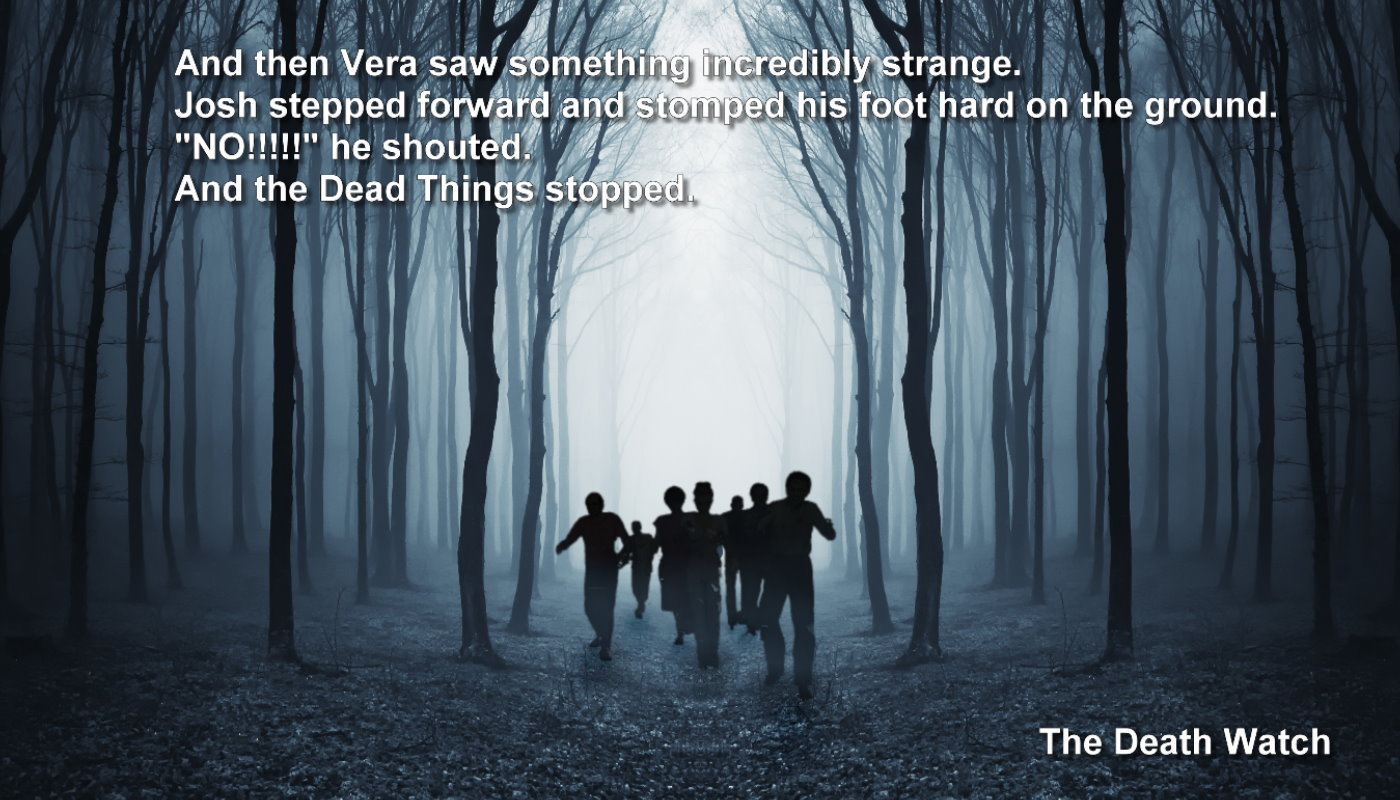
(Posted 3/25/2014)
Where did the idea for the novel first come from?
(Posted 3/13/2014)
Chris: I think the genesis of the idea came from
an article I read about ten years ago. Zack Snyder’s remake of Dawn
of the Dead had just become a big hit and I remember reading an article
about [spoiler alert!] how the movie originally had a happy ending. Apparently,
audiences at test screenings didn’t like the end, so they re-filmed
it so everyone died.
Bree: I still can’t believe that. It just
seems so ridiculous.
Chris: I know, right? Then when they showed test
audiences the film with the downer ending, suddenly, everyone loved it.
This article was like a pebble in my shoe – I couldn’t stop
thinking about it!
Bree: OK, I’m just going to say here that
I’ve never seen the movie because I hate horror movies. (I know that
must seem ironic since I just co-wrote a novel with zombies in it.) It seems
especially odd because Hollywood loves happy endings.
Chris: Exactly! And here they’d re-shot
a movie to make it sad and the audience actually preferred it that way.
Bree: So… who were they testing this for?
Jaded hipsters?
Chris: They were selected by a focus-group company
so presumably they were real, live Walmart-shopping, sweat-pant wearing
people and they actually preferred to see an ending where Sarah Polley…
Bree: May I just say here, I love her.
Chris: Everybody loves her.
Bree: But audiences preferred to see her and all
her friends get reduced to zombie food?
Chris: Yeah.
Bree: But why?
Chris: So here’s what I came up with: every
horror genre plays upon real fears. One of the reasons I love the zombie
genre is that it plays on two of our deepest fears. The first is our fear
of being eaten.
Bree: Not something I worry about that often,
but it makes sense that it would be a pretty primal fear.
Chris: The other is our fear of the end of the
world.
Bree: So you could say that zombies tap into both
our first and last fears.
Chris: Pretty much. But here’s the thing
about the end of the world: no matter how hard you try, you can’t
escape it. This is the one horror genre where happy endings ring false.
That’s why audiences, especially those raised in western culture and
religions preferred the bleak ending.
Bree: Look at you coming up with theories!
Chris: Well, it made sense to me. But then everything
changed…
Bree: What changed?
Chris: Zombie movies got really popular again.
Bree: So, I guess you could say, they rose from the dead…
Chris: *sigh* Yes. Yes, you could. The modern zombie film really starts with Romero’s Night of the Living Dead in 1968. That movie was the first where the zombies were creatures that rose from the dead to eat the living. It set the zombie rules and one of the biggest rules was that zombies are slow.
Bree: Which actually doesn’t seem very scary.
Chris: Well, it is if you’re cornered in a small cramped space. But Snyder’s Dawn of the Dead took an idea from Boyle’s zombie-ish 28 Days Later and made the zombies run.
Bree: When we wrote The Death Watch, we had some fun with this because the novel starts out with the slow, “Coke-classic” style zombies and then the “New Coke” type of fast zombie shows up and everyone freaks out.
Chris: I remember freaking out in a theater watching Dawn of the Dead: ‘Wait! Zombies can run?!!’ That one change turned out to be huge.
Bree: Because now there’s action.
Chris: Exactly. And with more action, many filmmakers toned down the gore, so now these films could reach a wider audience. These films did so well that others started playing around with the genre: there were zombie-comedies like Shaun of the Dead and Zombieland, zombie-sci-fi like Resident Evil and I Am Legend, a zombie-war film with World War Z and even a zombie-romance: Warm Bodies.
Bree: So Chris, tell everyone reading how this ties into our novel.
Chris: With all the changes to the genre, I got to thinking about that story about re-filming the ending of Dawn of the Dead again and I thought, ‘I guess the lid’s blown off this thing now – I wonder how far we can take it?’ And I wondered, ‘What if we use the zombie story, the most fatalistic of all genres, and use it to tell the most hopeful of all stories…’
Bree: The hero’s tale.
Chris: Right.
Bree: Which comes from Joseph Campbell’s book The Hero with a Thousand Faces…
Chris: …which became really popular after George Lucas revealed he’d used it as the basis for Star Wars.
Bree: The idea is that heroic stories from all over the world are, at their core, variations of the same story: a hero marked by destiny has to fight against an overwhelming evil to save the world. It’s a strong theme in YA fiction, in everything from Harry Potter or The Lightning Thief to The Hunger Games.
Chris: Right. That was the real spark for The Death Watch: could you tell the hero’s story in a zombie world?
Bree: Could you put hope in the middle of the most hopeless situation: the end of the world.
Chris: Everything else flowed
out of that.
Return to home
Contact us here! We'd love to hear from you.